Astromar Logistics Pvt. Ltd. operates two FTWZ facilities in the Mumbai region: an on-port site inside the JNPA SEZ at Uran, and an inland site at Panvel in Navi Mumbai. Customs duty and IGST are deferred until goods are cleared into the domestic market.
Duty and IGST
Deferred
GST Deferral
Until DTA Clearance
Customs
Coordination
10
FTWZ Facilities
ABOUT THIS FACILITY
Free trade zone warehousing in Mumbai lets importers bring goods into India, hold them under customs control and choose later whether to sell them domestically, re-export them or move them to another zone. Customs duty and IGST remain deferred while goods stay in the zone and are payable only on clearance into the Domestic Tariff Area (DTA). Re-exported goods do not attract customs duty. Both facilities are notified under the SEZ Act, 2005, subject to applicable regulations governing FTWZ status.
Storage is available for up to 3 years, extendable to 5 with special permission, longer than a standard bonded warehouse typically allows. The zone permits repacking, relabelling, sorting, kitting, quality inspection, consolidation and CKD/SKD assembly, so cargo can be prepared before duty is paid. Customs clearance is handled on-site, and bonded transport connects the facilities with the JNPA terminals.
SERVICES AVAILABLE
Uran, Raigad, Maharashtra
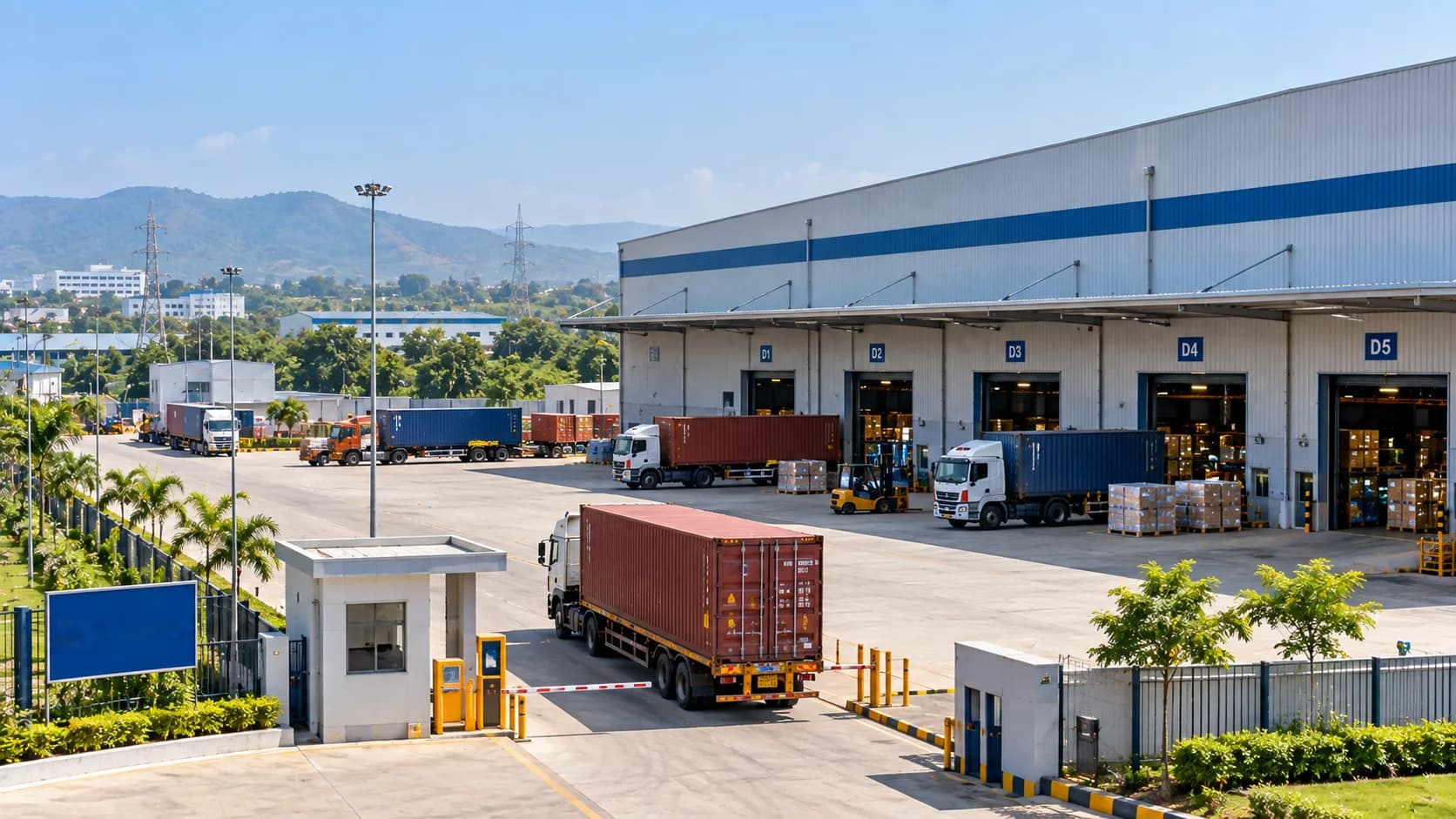
The JNPA facility sits inside the JNPA SEZ at Uran, in Raigad district, beside Nhava Sheva, one of India's major container ports. Containers move from the terminal to the warehouse without inland transit, which removes trucking cost and the detention charges that build up while a box waits for a vehicle. That makes it the natural choice for importers who handle high volumes of containers, re-export, consolidate or run time-sensitive supply chains.
Consolidation and break-bulk work are the facility's strengths: cargo from several suppliers can be received, sorted and combined into one outbound shipment, then released for re-export or cleared into the DTA when buyers are ready. The Western Dedicated Freight Corridor gives rail access to inland container depots in North India, and the NH 348 Uran-Panvel road links to the Mumbai-Pune Expressway and the Mumbai Trans Harbour Link (MTHL) for South Mumbai. Containerised electronics, automotive parts, consumer goods, pharmaceuticals, chemicals, textiles and machinery are the usual cargo.
Nearest Port: Jawaharlal Nehru Port (JNPA)
Nearest Airport: Chhatrapati Shivaji Maharaj International Airport (BOM) — 40 km
Panvel, Raigad, Maharashtra
The Panvel facility is in Taluka Panvel, Raigad district, about 35 km from JNPA by road. It sits where the Mumbai-Pune Expressway meets the NH 4 corridor, so it serves as a bridge between the port and Maharashtra's industrial belt, including Pune, Nashik and Aurangabad. Panvel Railway Junction, on the Central and Harbour lines, is nearby. Operating costs here are lower than in core Mumbai, and the MTHL shortens the drive to South Mumbai.
Panvel is built for distribution and value-added work rather than container-side speed. Automotive OEMs and Tier-1 suppliers, electronics and IT hardware importers, FMCG and consumer goods companies, chemicals and pharma importers, and project cargo operators handling heavy machinery and capital equipment use it to hold stock close to their customers, kit and relabel it, and release it in batches. Many importers pair the two sites, using JNPA for fast container turns and Panvel for storage and onward distribution.
Nearest Port: Nhava Sheva (JNPA)
Nearest Airport: Chhatrapati Shivaji Maharaj International Airport (BOM) — 45 km
Temperature-sensitive goods, such as some pharmaceutical products and food items, can be held in cold storage at Astromar's Mumbai FTWZ while clearance and release are planned. Goods stay under customs control, so you can match the move into the domestic market to when stock is needed. Share the cargo's temperature requirements and documents with the team before shipping so they can confirm it suits the facility.
Astromar handles dangerous goods at its Mumbai FTWZ alongside standard bonded storage, subject to applicable regulations. This includes hazardous chemicals and components moving through the JNPA gateway. Send the product's classification and safety data sheet before shipping so the team can confirm handling and storage. Chemicals that are not classified as hazardous follow the standard route.
By road, the NH 348 Uran-Panvel corridor and the Mumbai-Pune Expressway connect both sites to Pune, Nashik and Gujarat's industrial belts, and the MTHL cuts the drive to South Mumbai. By rail, the Western Dedicated Freight Corridor serves container movement to North India from JNPA, and Panvel Junction handles passenger and local links. By sea, Nhava Sheva's container terminals offer liner services to the main trade routes. By air, Navi Mumbai and Chhatrapati Shivaji Maharaj International Airport are the gateways for urgent or high-value consignments. Bonded transport carries cargo between the terminals and either facility under customs seal.
Kitting, labelling, repackaging, quality inspection and palletisation are done inside the zone while goods stay bonded. Each job is scoped in a work order and checked against the facility's authorised operations before work starts. Every consignment is entered in the bonded stock ledger against your reference and tagged to a location, with periodic cycle counts and a Goods Receipt Note (GRN) issued on arrival. Shortage or damage found on receipt is photographed and reported to you the same working day.
Three exit routes are open. For domestic sale, a Bill of Entry for home consumption is filed, and customs duty and IGST are paid on the value at the time of clearance. For re-export, a Shipping Bill is filed and goods leave India without customs duty. For a transfer, goods move under bond to another FTWZ or SEZ unit, still duty-deferred. Clearance timelines and the documents we need are the same as at our Chennai zone, and we flag anything that may affect your schedule as soon as it arises.
FACILITY DETAILS
A standard bonded warehouse allows duty-deferred storage but typically limits storage to one year and restricts permitted activities. The FTWZ allows storage up to 3 years, extendable to 5 with special permission, and the activities listed above.
No customs duty becomes payable on goods re-exported from the zone. Duty and IGST arise only when goods are cleared into the DTA.
Yes. Sales made while goods are in the zone are outside the scope of GST until clearance into the DTA. Duty and IGST become payable at clearance, based on the value and classification then. Confirm the treatment of your own transactions with your tax advisor.
Explore Astromar's FTWZ facilities across India
Partner with India's leading FTWZ provider and unlock bonded warehousing with duty and IGST deferred, GST deferment, and seamless logistics.