

Cold Storage
Cold Storage Warehouse in India: A Complete Guide for Importers
2 Mar 2026 · 9 min read
For any business importing pharmaceuticals, food, perishables, or temperature-sensitive chemicals, the warehouse is not just a place to keep goods — it is what protects the value of the entire shipment. A single break in temperature can turn a container of high-value product into a write-off. This is why the cold storage warehouse has become one of the most important links in a modern supply chain, and why choosing the right one matters far more than storage cost alone.
What Is a Cold Storage Warehouse?
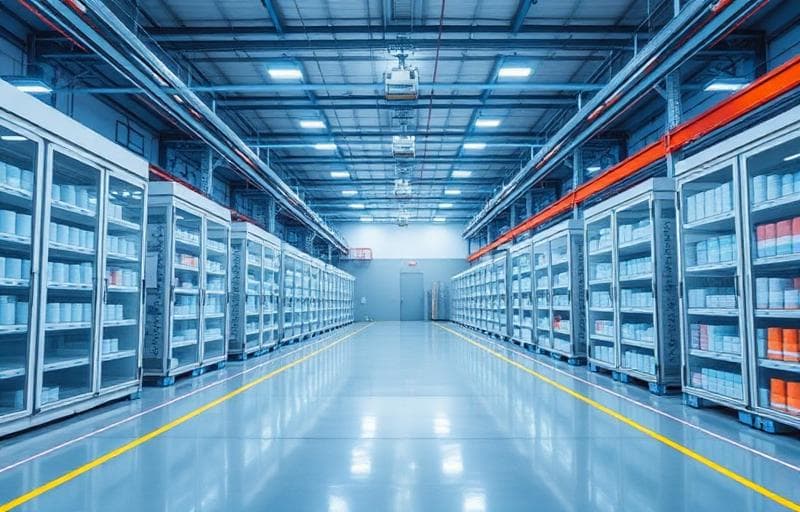
A cold storage warehouse is a temperature-controlled facility designed to store goods that must be kept within a specific temperature range. Unlike a conventional warehouse, it maintains a consistent, monitored climate — anything from mild chilling for fresh produce to deep-freeze conditions for certain pharmaceuticals and frozen foods.
Most professional cold storage facilities are divided into distinct temperature zones so that different product types can be stored correctly in the same building. Common zones include ambient (room temperature), chilled (roughly 2–8°C, typical for many pharmaceuticals, dairy, and fresh produce), and frozen (below 0°C, for frozen foods and certain biological products). The best facilities monitor these zones continuously and keep records, so there is a verifiable temperature history for every consignment.
Why Temperature-Sensitive Goods Need Specialised Storage
Temperature-sensitive products lose value the moment they leave their required range. For pharmaceuticals, an excursion outside the approved range can render a batch non-compliant and unsellable. For food and perishables, it shortens shelf life and increases spoilage. For certain chemicals, it can even be a safety issue.
A proper cold storage warehouse reduces this risk in several ways: consistent temperature control, backup power so cooling continues during outages, continuous monitoring with alerts, and trained handling so goods spend minimal time outside controlled conditions during loading and unloading. The result is lower spoilage, fewer rejected batches, and compliance records that stand up to audit.
Cold Storage Inside an FTWZ: The Duty Advantage
Where cold storage becomes especially powerful for importers is when it sits inside a Free Trade Warehousing Zone (FTWZ). In an FTWZ, imported goods are held in a customs-controlled environment, and applicable customs duties generally become payable only when the goods are cleared into the domestic market — not when they arrive.
Combine that with temperature-controlled storage and the benefit compounds. An importer of, say, temperature-sensitive pharmaceuticals can hold stock in bonded cold storage, keep it perfectly within range, and pay duty only as each batch is released to customers. Capital isn't tied up in duty on inventory that hasn't sold yet, and the goods stay protected the entire time. For businesses that import in bulk and release over months, this pairing of cold storage and duty deferment is a genuine working-capital advantage.
See CBIC's official customs resources →What to Look for in a Cold Storage Provider
Not every facility labelled 'cold storage' offers the same standard. When evaluating a cold storage warehouse, it is worth checking a few things carefully.
Temperature range and zones: Does the facility support the specific range your products need, and can it segregate different product types? Monitoring and records: Is temperature logged continuously, with alerts and an audit trail? Backup power: What happens during a power failure — is there redundancy to keep cooling running? Compliance: For pharma and food, does the facility follow the relevant good-storage and hygiene practices? Location and connectivity: Is it near the port or airport your goods arrive through, to minimise time in transit and out of controlled conditions?
Answering these questions upfront prevents costly surprises later.
See FSSAI's cold storage guidelines →Cold Storage in Chennai and Across India
India's growing trade in pharmaceuticals, processed food, and perishables has driven strong demand for quality cold storage — particularly in major trade hubs. Chennai, with its port and airport connectivity, is one such hub where temperature-controlled and bonded cold storage supports importers and exporters serving both domestic and international markets.
Astromar operates FTWZ facilities across ten strategic locations in India, with warehousing solutions that include support for temperature-sensitive and specialised cargo. Holding such goods inside an FTWZ means importers get the temperature control they need alongside the customs and duty-deferment benefits of the zone — one facility handling both the physical and the financial side of the supply chain.
Read the Special Economic Zones Act, 2005 →Industries That Depend on Cold Storage
A surprising range of industries rely on temperature-controlled warehousing. Pharmaceuticals and healthcare are among the most demanding — vaccines, biologics, and many medicines have strict storage ranges and require documented, unbroken temperature control. Food and beverage businesses use cold storage for dairy, meat, seafood, fruit, vegetables, and frozen products, where temperature directly determines shelf life and safety.
Beyond these, specialty chemicals and certain industrial products need controlled storage for stability or safety reasons, and even sectors like cosmetics and nutraceuticals increasingly depend on it as products become more sensitive. What these industries share is that the cold storage warehouse is not a convenience — it is a condition of doing business. Getting it wrong means product loss, compliance failures, and damaged customer trust; getting it right protects both margin and reputation.
Common Cold Storage Mistakes to Avoid
Businesses new to temperature-sensitive logistics often make a few avoidable mistakes. The first is choosing on price alone — a cheaper facility that can't guarantee consistent temperature or backup power can cost far more in spoiled stock than it saves in rent. The second is ignoring the 'last few metres': goods can be perfectly stored yet still ruined during loading and unloading if they sit outside controlled conditions for too long, so handling discipline matters as much as the cold room itself.
A third mistake is overlooking documentation. For pharma and food especially, being able to prove the temperature history of a consignment is often as important as the temperature itself — buyers and regulators may require it. Finally, some businesses treat storage and customs as separate problems; holding temperature-sensitive imports in bonded cold storage inside an FTWZ solves both at once, which is usually simpler and cheaper than managing two providers.
Is Cold Storage Right for Your Business?
Cold storage is essential if your products are temperature-sensitive — but like any logistics decision, it should be chosen because it solves a real problem, not simply because it is available. If your goods clear customs immediately and move straight to customers, standard handling may suffice. If, however, you import temperature-sensitive stock in bulk, release it over time, or need to protect high-value perishable or pharmaceutical cargo, a professional cold storage warehouse — ideally within an FTWZ — can protect both your product and your cash flow.
The right question is not just 'where do we store this?' but 'how do we keep it in perfect condition while managing cost and compliance?' For temperature-sensitive importers, that is exactly what a well-run cold storage warehouse is built to answer.
Related Topics
cold storage warehousecold storage warehouse in indiacold storage in chennaicustom bonded warehousetemperature controlled warehouse
Related Articles


Need FTWZ Warehousing or Freight Support?
Talk to our logistics experts — free consultation, no commitment.