The conversation started with a simple question: "We know there's demand for our products in India. But do we really need to set up a company before we know if the market is right for us?" The company was a mid-sized manufacturer from Northern Europe producing premium industrial safety equipment. Over the past year, enquiries from Indian distributors had become more frequent, and a few potential customers had even requested shorter delivery times. The opportunity was clearly there — the uncertainty was everything that came after it.
Setting up a legal entity in a new country is a significant business decision. It involves time, investment, compliance requirements, and long-term commitments. For a company that was still evaluating market demand, it felt like a step they weren't yet ready to take. What they needed wasn't a shortcut — they needed a way to test the market before making a larger commitment.
Looking Beyond the Traditional Import Model
Like many businesses entering a new country for the first time, the company's initial assumption was straightforward: if products were going to be sold in India, they would first need to establish a local company, lease warehouse space, build a distribution network, and then begin serving customers. It seemed like an all-or-nothing decision — either commit fully or stay out of the market altogether.
During discussions with logistics and trade specialists, however, another option emerged — one the management team hadn't considered before. Instead of establishing a local presence immediately, they could begin by storing inventory within a Free Trade Warehousing Zone (FTWZ) while they assessed how the market developed. That changed the conversation.
Visit DGFT, Ministry of Commerce & Industry →Bringing Products into India — Without Rushing the Decision
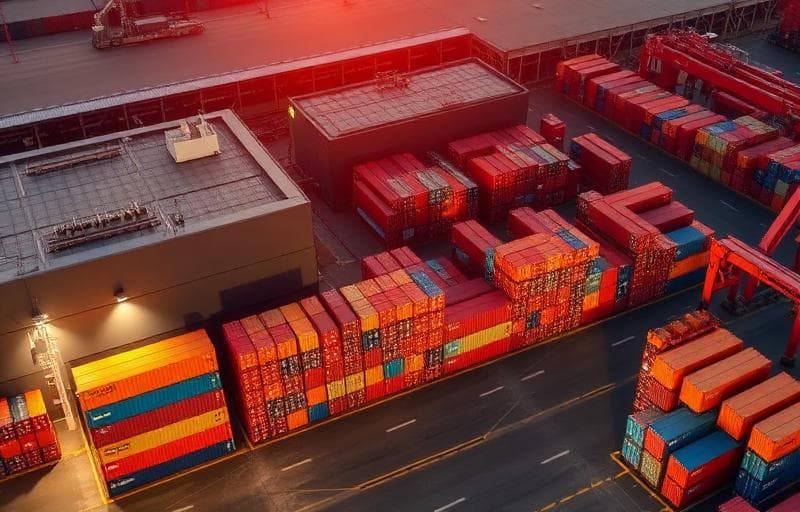
The company decided to ship its first inventory into an FTWZ using ocean freight. Once the shipment arrived, the goods were moved into the customs-controlled facility, where they remained under customs supervision until cleared into India's Domestic Tariff Area (DTA), subject to applicable regulations.
From a business perspective, this created breathing room. The inventory was already in India, and potential customers no longer needed to wait for every order to be shipped from Europe. At the same time, the company hadn't committed to establishing a permanent local operation before understanding how the market would respond — instead of making decisions based on assumptions, they could now make them based on actual customer demand.
See CBIC's official customs resources →Preparing Products for Different Customers
As enquiries began to increase, another challenge appeared: different customers wanted products presented slightly differently. Some requested specific labels, others required bundled accessory kits, and certain distributors asked for additional quality inspections before delivery.
Rather than sending products back through multiple warehouses, approved value-added activities such as repacking, relabelling, sorting, kitting, quality inspection, and cargo consolidation could be carried out within the FTWZ, subject to applicable regulations. The products remained within the same customs-controlled environment while being prepared for their intended destination — operationally, it simplified the process, turning warehousing and product preparation into part of the same supply chain rather than separate activities.
Reaching Customers the Right Way
One important point became clear as the company moved forward: storing goods in an FTWZ without a local entity didn't automatically mean products could be sold directly into the Indian domestic market without local involvement. When goods were cleared into India's Domestic Tariff Area (DTA), the domestic clearance process generally involved an Indian importer of record, such as the company's appointed distributor or customer, in accordance with applicable customs regulations.
That suited the company's strategy perfectly. Their focus wasn't on opening retail operations — it was on supporting Indian distributors with faster product availability while continuing to evaluate long-term opportunities. The FTWZ allowed them to position inventory closer to customers without requiring an immediate decision on establishing a permanent business presence.
Keeping Regional Opportunities Open
As the months went by, something unexpected happened: not every shipment stayed in India. Interest also began to emerge from neighbouring markets, and because part of the inventory remained within the FTWZ under customs supervision, some products could be prepared for re-export to other destinations, where applicable and subject to applicable regulations.
That flexibility proved valuable. Instead of treating India as the final destination for every shipment, the company began viewing it as an important regional logistics hub supporting multiple markets. It wasn't part of the original plan, but having inventory positioned strategically made new opportunities easier to respond to.
Read the Special Economic Zones Act, 2005 →A Different Way to Think About Market Entry
One of the biggest lessons the management team shared afterwards had very little to do with warehousing — it was about decision-making. Initially, they believed entering the Indian market required making every major investment upfront. In reality, they discovered there was another path.
They could establish inventory, support distributors, understand customer demand, refine their distribution strategy, and learn how the market worked before deciding whether a permanent local entity made business sense. That gradual approach gave them confidence, because every decision was based on experience rather than expectation.
Final Thoughts
Expanding into a new country is rarely just a logistics decision — it's a business decision. Companies naturally want to reduce uncertainty before making long-term commitments, especially when entering a market as large and diverse as India.
A Free Trade Warehousing Zone (FTWZ) offers one way for businesses to position inventory closer to customers while keeping their options open. Subject to applicable regulations, imported goods can be held under customs supervision, prepared through approved value-added activities, and managed efficiently until they're either cleared into India's Domestic Tariff Area (DTA) through the appropriate domestic importer of record or re-exported to other markets.
For many foreign brands, the first step into India doesn't have to be opening an office. Sometimes, it simply starts with placing inventory in the right location — and letting the market guide what comes next.
Related Topics
FTWZ market entry Indiasell in India without local entityFTWZ for foreign companiesIndia market entry logistics
Need FTWZ Warehousing or Freight Support?
Talk to our logistics experts — free consultation, no commitment.