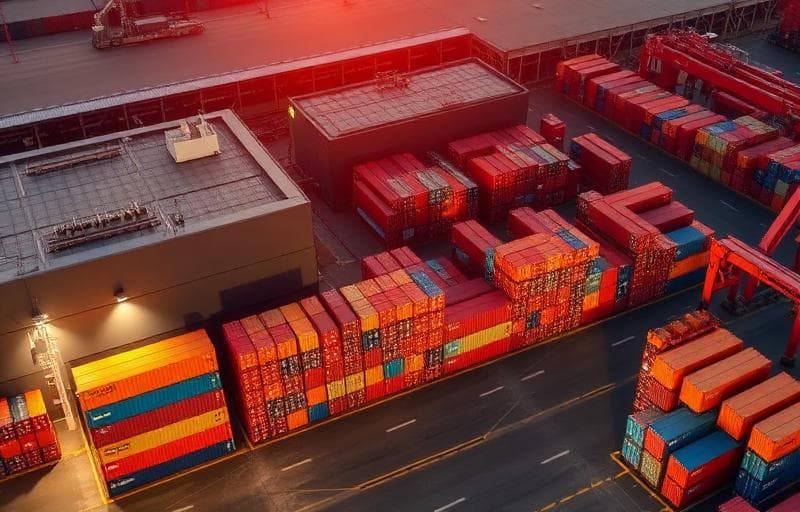
Importing textiles into India can look fairly simple from the outside. A supplier sends the goods, the shipment arrives at an Indian port, the importer completes customs clearance, and the cargo moves to the warehouse or factory. In practice, there can be quite a few more steps in between.
A container may contain rolls of fabric, yarn, finished garments, accessories or several different textile products. Before those goods can move through customs, someone needs to explain exactly what they are, how they're packed, what they're made of and how they should be classified. That's where documentation becomes important.
For a textile importer, an invoice saying "fabric" may not tell the whole story. Customs may need to understand whether it's woven or knitted, what fibres it contains, how it's been processed and other characteristics that can affect its classification. None of this means textile imports are necessarily difficult — it simply means good preparation matters.
Why Textile Imports Need Careful Documentation
One of the biggest challenges with textiles is the sheer variety of products that fall under the category. Two rolls of fabric sitting next to each other might look almost identical to someone unfamiliar with the industry — but one could be 100% polyester while the other is a polyester-cotton blend, one might be woven and the other knitted. Those differences can matter when determining the appropriate customs classification and applicable requirements.
So when preparing for customs clearance, the question isn't simply "what are we importing?" It's "what exactly are we importing?" That extra level of detail is what helps customs and logistics teams understand the shipment properly. See how Astromar handles customs clearance →Start With the Product, Not the Paperwork
A common mistake is to begin thinking about customs documentation only after the vessel is already on its way to India. By then, there may not be much time to correct a problem.
Before the supplier ships the goods, the importer should ideally understand what the product is made from, how it's manufactured, whether it's woven or knitted, its weight and dimensions, how it's packed, where it was manufactured, and whether any special standards or labelling requirements apply. This information can then be used to prepare the commercial documents and review the likely customs classification — and gives the importer an opportunity to identify questions before the container reaches the port.
The Commercial Invoice: Keep It Clear
The commercial invoice is one of the most important documents in an import shipment, containing information such as the buyer, seller, product description, quantity and price. For textile shipments, the product description deserves particular attention — writing "Fabric – 10,000 kg" may be too broad to properly describe the shipment.
A more useful description could identify the type of fabric and relevant characteristics, based on the actual product. The goal isn't to make the invoice unnecessarily complicated — it's to make it clear. Someone reviewing the paperwork should be able to understand what the cargo actually is without having to guess.
Fibre Composition Can Make a Difference
Textiles can be made from a wide range of natural and synthetic fibres — cotton, polyester, viscose, nylon, wool and acrylic, plus blended materials like a fabric containing 60% cotton and 40% polyester. This information can be relevant to classification and other regulatory considerations.
Textile importers should obtain reliable fibre-composition information from the supplier. If the supplier simply describes everything as "synthetic fabric," the importer may not have enough information to properly assess the product. A technical specification sheet can be useful here, and for larger or more complex shipments, having product specifications available before shipment can save a lot of back-and-forth later.
Don't Automatically Use the Supplier's HS Code
Overseas suppliers often provide an HS code on their commercial documents. That code can be useful as a reference, but it shouldn't automatically be assumed to be the correct Indian classification — it needs to be considered under the applicable Indian customs tariff and based on the actual characteristics of the goods.
For textile products, factors such as fibre composition, construction and processing can influence classification. If there's uncertainty, the importer may want to consult a qualified customs professional rather than choosing a code simply because it appears to match the product name. A wrong classification can potentially affect duty calculation and other aspects of the customs process.
Woven and Knitted Fabrics Are Not the Same Thing
This sounds obvious to someone working in textiles, but it's an easy distinction to overlook when preparing generic import documentation. Woven fabrics and knitted fabrics are manufactured differently and can fall under different tariff classifications — the same broad commercial term "fabric" can therefore cover products that need to be treated differently for customs purposes.
This is why product specifications should be detailed enough to identify the actual construction. If the importer doesn't know whether a product is woven or knitted, that's a question worth asking the supplier before shipment.
The Packing List Tells the Physical Story
The invoice tells you about the commercial transaction. The packing list helps explain how the physical cargo is arranged — especially useful when a textile container contains a large number of rolls, cartons or bales, each with its own package count, gross weight, net weight and dimensions.
Most importantly, the packing list should agree with the other shipping documents. Imagine the commercial invoice says the shipment weighs 18,000 kg, the packing list says 17,200 kg, and the Bill of Lading says 18,000 kg — there may be a reasonable explanation, but someone will need to explain the difference. Document reconciliation is worth doing before the vessel arrives; a few minutes spent checking the numbers can prevent unnecessary questions later.
Textile Rolls Need Practical Handling Planning
Customs documentation is only one side of the problem — the importer also needs to think about what happens after clearance. Fabric often arrives in rolls or bales, and the dimensions and weight of those packages can vary considerably. A warehouse needs to know how many rolls, how much each weighs, and whether they can be stacked or need pallets.
These may seem more like warehouse questions than customs questions, but they're part of the same logistics chain. A shipment doesn't stop being a physical product simply because the paperwork is complete.
Apparel Shipments Can Have Hundreds of SKUs
Finished garments can create another challenge: SKU complexity. A container may contain several styles, sizes and colours, with a single purchase order involving hundreds of individual SKUs — 500 small shirts, 750 medium shirts, 900 large shirts, 600 extra-large shirts, and several different colours and styles.
Without a clear packing list, it can become difficult to identify exactly what has arrived. The more detailed the shipment, the more important accurate documentation becomes — good records also help after customs clearance, when goods enter the warehouse and eventually move to customers or retail locations.
Labelling Should Be Checked Before Shipping
For packaged textile and apparel products sold at retail, label declarations such as product identity, importer or manufacturer details, country of origin, size and other particulars can apply under the Legal Metrology (Packaged Commodities) Rules, 2011, depending on the product and how it's being sold. Separately, Bureau of Indian Standards requirements apply only to textile products covered by BIS Quality Control Orders. The exact requirements can vary depending on the specific product.
That's why it's risky to assume a label accepted in the exporting country will automatically meet every applicable Indian requirement. A supplier in China, Vietnam or another manufacturing country may be following its local market's labelling rules — the Indian importer needs to check what applies to the Indian market. Doing this before shipment is generally much easier than discovering an issue after the container has arrived. Country of Origin and Testing Certificates
Depending on the shipment and the tariff treatment being claimed, a Certificate of Origin or other supporting documentation may be relevant — particularly important when an importer is considering preferential treatment under an applicable trade agreement, since the certificate needs to satisfy the relevant requirements for that arrangement.
Not every textile shipment has the same regulatory requirements either. Some products may be subject to applicable standards, testing or certification requirements depending on their characteristics and intended use. The supplier should be asked early whether any technical certificates, test reports or compliance documents are available, so the importer can determine which are actually relevant.
The Bill of Lading and Customs Value
The Bill of Lading is primarily a transport document, but the information on it should still be reviewed alongside the commercial paperwork — shipper, consignee, cargo description, package count, weight and container details. A good document review doesn't look at the invoice, packing list and Bill of Lading separately; it looks at the shipment as one package.
Customs authorities also need to determine the appropriate value of imported goods under the applicable valuation rules maintained by CBIC. Importers should keep relevant commercial records that support the declared transaction value, particularly for related-party transactions, samples, promotional shipments or unusual pricing arrangements. The important thing is making sure the commercial documents accurately represent the transaction. What Happens If Customs Wants to Examine the Cargo?
Sometimes customs may require physical examination or verification of the shipment. For a container carrying hundreds of cartons or fabric rolls, this can be more involved than checking a small shipment — the relevant packages may need to be located, opened or presented for examination.
This is where good package markings and an accurate packing list can help. If every roll or carton has a clear reference that matches the paperwork, it can be easier to identify the required goods. It doesn't eliminate the examination — it simply makes the process easier to coordinate.
Good Documentation Starts With the Supplier
Many documentation problems actually begin outside India. The importer may assume the supplier understands exactly what information is required; the supplier may assume the importer will fill in the missing details. Then the container is shipped.
A better approach is to provide the supplier with clear documentation requirements before shipment: full product description, fibre composition, fabric construction, quantity, net and gross weight, package count and dimensions, country of origin, technical specifications, relevant certificates and labelling details. The supplier doesn't need to be a customs expert — but they do need to provide accurate information about the goods.
Where Does an FTWZ Fit Into Textile Logistics?
For some textile importers, the logistics question continues after customs clearance. The company may not need all of its imported inventory immediately — a shipment could contain several months' worth of material, or goods intended for different customers and markets. In such cases, the importer may evaluate whether an FTWZ can form part of its warehousing strategy for eligible goods and transactions.
The potential advantage isn't simply having somewhere to store boxes — it's about managing inventory timing. A textile importer may receive a large international shipment but release the goods gradually according to production schedules or customer orders. Subject to the applicable customs framework, an FTWZ can be considered as one possible part of that model, particularly relevant for importers routing cargo through a major port such as Mundra, which serves textile clusters in Gujarat. It isn't automatically the right answer for every textile importer — the decision depends on shipment volume, inventory cycle, customer locations and commercial requirements. Why Customs and Warehousing Should Be Planned Together
Imagine a textile importer receives a container containing 500 rolls of fabric. The cargo clears customs, but the warehouse is expecting 300 rolls — the remaining 200 are intended for another customer. If nobody planned this before arrival, the importer now has to figure out where the remaining inventory should go, leading to extra handling and transportation.
A better approach is to understand the inventory plan before the shipment arrives — particularly important for businesses using an FTWZ or other specialised warehousing arrangement. The customs team, warehouse team and transport team should ideally work from the same shipment information.
What Textile Importers Should Avoid
Some mistakes are simple but surprisingly common: using a vague product description like "fabric" that doesn't provide much information; copying the supplier's HS code without review, when classification should be considered under the applicable Indian tariff; ignoring fibre composition, which can be relevant to classification and other requirements; checking labels only after arrival, when it's generally easier to identify requirements before shipment; not checking package details, so rolls, cartons and bales are properly accounted for; ignoring discrepancies between documents; and treating customs as a last-minute activity rather than reviewing documentation early, when there's more time to correct problems.
Final Thoughts
Textile and apparel imports are a good example of why customs clearance is about much more than submitting a few documents. Behind every container is a physical product with specific characteristics — the fabric has a composition, a construction, a weight, a method of packing. The garments have sizes, styles and quantities. All of that information needs to be reflected accurately enough in the import documentation to support the customs process.
For an importer, the safest approach is usually to start early: understand the product first, then review the classification, then prepare the commercial documents, then check applicable labelling and regulatory requirements, and finally make sure the logistics plan is ready for the moment the shipment clears customs.
For businesses importing textiles regularly, that planning can extend beyond the port itself — warehousing, inventory allocation and distribution all become part of the same supply chain.
Astromar Logistics Pvt. Ltd. supports textile and apparel importers with customs clearance and FTWZ warehousing solutions for eligible import transactions.
Whether the cargo moves directly to a factory, into a conventional warehouse or into an FTWZ arrangement for eligible transactions, the principle remains the same: know what you're importing, document it accurately and plan what happens next. In international trade, good documentation may seem like a small administrative detail — until something doesn't match. Then it becomes one of the most important parts of the shipment.
Related Topics
textile customs documentation Indiaapparel import clearancefibre composition classificationtextile HS code Indiatextile labelling requirementscustoms clearance
Need FTWZ Warehousing or Freight Support?
Talk to our logistics experts — free consultation, no commitment.