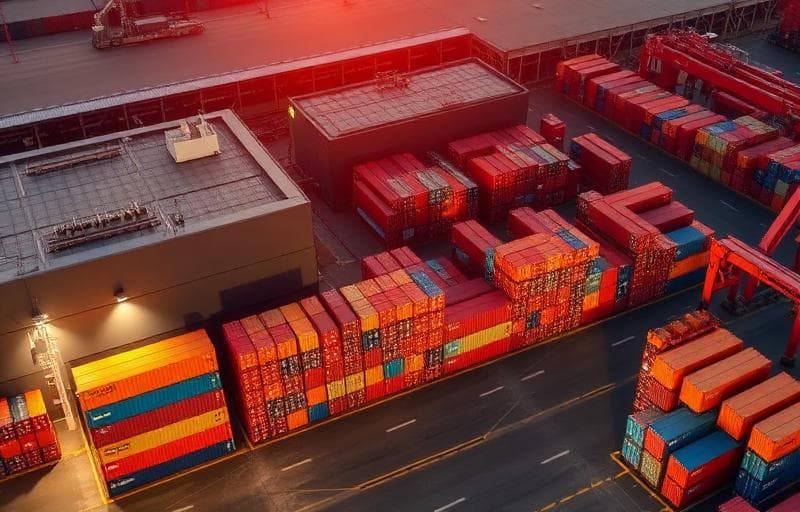
A container carrying hazardous chemicals cannot be handled in exactly the same way as a container carrying ordinary industrial goods. The difference becomes clear as soon as the cargo reaches the warehouse.
With general cargo, the focus is usually on unloading, finding storage space, keeping inventory organised and arranging dispatch. With hazardous chemicals, there is another level of responsibility. The warehouse team needs to know what the material is, how it should be handled, what products need to be kept apart and what to do if something goes wrong.
For companies managing chemical imports around Dahej, these considerations become an important part of the overall logistics plan. Hazardous chemical storage in Dahej is not simply about finding a warehouse with available space — the storage arrangement needs to suit the product, and the people handling it need to understand the risks involved.
Why Hazardous Chemicals Need Different Handling
The word "chemical" covers a very wide range of products. Some may be flammable. Others may be corrosive, toxic or reactive. Some may need protection from heat or sunlight, while others may have specific ventilation or handling requirements. That makes it difficult to apply one standard storage method to every chemical.
The starting point should always be understanding the actual product: what is it, how is it packaged, what are its hazards, does it need temperature control, can it be stored alongside other products, and what happens if the package is damaged.
A warehouse is not simply protecting the customer's inventory. It is also responsible for maintaining a safe working environment for the people handling that inventory.
Segregation Is More Than Just Keeping Products Organised
Two products may look completely harmless when sitting on separate pallets. That doesn't mean they should be stored next to each other. Some chemicals are incompatible and may react if they come into contact — a damaged container, leakage or handling accident can turn a simple storage issue into a serious safety problem.
A warehouse handling multiple chemicals may need to consider chemical compatibility, flammability, corrosive properties, toxicity, packaging, temperature requirements, ventilation, spill risks and emergency response requirements. Storage locations should be assigned based on the characteristics of the cargo rather than simply on whichever space happens to be available.
Good Labelling Makes Everyday Operations Safer
When a warehouse handles a large number of chemical products, people need to be able to identify what they're handling quickly. Clear labelling and hazard identification help warehouse personnel understand the product and the precautions associated with it — particularly important when products have similar packaging or arrive from several different suppliers.
Imagine a damaged package being discovered during a routine warehouse check. If the product can be identified immediately, the team can follow the appropriate procedure. If nobody is sure what the package contains, even a small incident becomes more difficult to manage. Good identification is part of warehouse safety, not just inventory control.
Storage Conditions Depend on the Product
There's no universal storage condition for hazardous chemicals. Some products need protection from direct sunlight, others require temperature-controlled storage, and certain materials need ventilation or specific containment arrangements. This is why the warehouse should understand the product requirements before accepting the cargo.
A facility may have plenty of physical capacity, but that doesn't automatically mean it's suitable for every chemical. Storing a product outside its recommended temperature range can affect the material itself; inadequate ventilation or inappropriate handling could create a safety concern. The storage arrangement should follow the product requirements, not the other way around.
Handling Can Be Just as Important as Storage
Even when the storage area is properly organised, the cargo still has to be moved — unloaded from a truck, checked, moved to its storage location, picked for dispatch and loaded again. Every movement creates a possibility of damage.
The way a drum is handled may be different from the way an IBC, palletised chemical or other packaged material is handled. Forklift operators and warehouse personnel should know the correct handling method for the cargo they're moving. The idea is simple: people shouldn't have to figure out how to handle a hazardous product while they're already handling it.
What Happens If There Is a Spill?
No warehouse wants to deal with a chemical spill, but hoping one never happens isn't a safety plan. A damaged drum, leaking container or handling accident can happen even in an otherwise well-managed facility — the response needs to be considered beforehand.
Depending on the product, this may involve appropriate PPE, spill-control materials, emergency contacts, isolation procedures and trained personnel. A procedure that works for one product may not be appropriate for another, which is why the warehouse needs to understand the materials in its inventory before deciding how it will respond to an incident.
Fire Safety Needs to Be Considered Carefully
Certain hazardous chemicals can also introduce additional fire risks. Where flammable materials are involved, the storage and handling arrangements need to take account of potential ignition sources, emergency access, ventilation and appropriate fire protection — areas regulated in India by PESO (Petroleum and Explosives Safety Organisation) for explosives and flammable substances.
Employees also need to know what to do in an emergency. It's not enough to have fire extinguishers somewhere in the building — the bigger question is whether the facility's emergency arrangements are appropriate for the materials actually being stored. A warehouse designed for general cargo should not automatically be assumed to be suitable for every type of hazardous chemical. Why This Matters in Dahej
Dahej has a strong concentration of chemical and industrial activity, which naturally creates demand for specialised logistics and warehousing. Companies operating in and around this industrial ecosystem may need to import raw materials, hold inventory, supply manufacturing facilities or distribute products to customers across India.
For eligible transactions, a Dahej FTWZ can form part of this logistics structure — providing a location where eligible imported goods can be stored and managed before domestic clearance or onward movement, subject to the applicable customs framework.
But the FTWZ element does not change the basic safety requirements of the cargo. If a chemical needs particular storage or handling controls, those requirements still need to be addressed, including any applicable hazardous substances regulations. Explore Astromar's Dahej FTWZ facility →Safety and Supply Chain Planning Go Together
Safety shouldn't be considered separately from supply chain planning. Suppose an importer receives a large quantity of chemical raw material and the customer doesn't need all of it immediately — some stock may remain in storage for several months.
The warehouse needs to understand not only how to store the material safely today, but how the inventory will be managed throughout that period. The operations team needs to know how often the stock will move, the transport team needs to understand dispatch requirements, and the warehouse needs to maintain appropriate storage conditions the whole time. A good supply chain plan looks beyond freight cost and transit time — the characteristics of the cargo matter too.
Small Oversights Can Create Bigger Problems
Most warehouse safety problems don't begin with someone deliberately ignoring a procedure. They begin with an assumption — that two products can be stored together, that a new chemical can use the same storage area as an existing product, that employees already know how to respond to a damaged package, or that a product has the same requirements as another chemical with a similar name.
During normal operations these assumptions may go unnoticed. During a spill, fire or handling accident, they become much more serious. Worth reviewing regularly: chemical segregation, product identification and labelling, employee training, spill-response arrangements, storage temperature requirements, housekeeping, emergency access, handling equipment, and changes in the product mix. Warehouse safety is rarely about one big action — it's the result of getting many small things right every day.
Training Matters More Than People Think
A warehouse can have good equipment and written procedures, but the people operating the facility still need to understand what they're doing. Training should be relevant to the employee's role — a forklift operator needs to understand safe handling and movement, a receiving employee needs to know what to check when a chemical shipment arrives, a supervisor needs to understand storage segregation and emergency procedures.
The objective isn't to turn every warehouse employee into a chemical specialist. It's to make sure everyone knows what's expected of them and when they need to escalate an issue.
What Should a Company Ask Before Choosing a Warehouse?
A company looking for hazardous chemical storage in Dahej shouldn't compare facilities only on price per pallet or square foot. The more important questions are operational: Can the facility handle the specific type of chemical? How are incompatible products segregated? What storage conditions are available? What handling equipment is used? What emergency procedures are followed? What training is provided to warehouse personnel? What product-specific regulatory requirements apply?
The answers depend on the cargo — a facility suitable for one chemical may not automatically be suitable for another.
Where FTWZ Fits Into the Chemical Supply Chain
For some chemical importers, the value of an FTWZ isn't limited to storage — it can also become part of the inventory strategy. Consider a company importing a large quantity of chemical raw material whose customers don't require the entire shipment immediately. The company could evaluate whether eligible inventory can be positioned within Astromar's FTWZ network and then managed according to actual commercial requirements — offering greater flexibility around inventory planning, domestic clearance and distribution.
However, the customs flexibility provided by an FTWZ should not be confused with safety flexibility. The chemical still needs to be stored and handled correctly. In practice, customs planning and operational safety need to work alongside each other. Final Thoughts
Hazardous cargo changes the way a warehouse needs to operate. It isn't enough to have an empty storage area and the right amount of space. The facility needs to understand the product, the warehouse team needs to know how it should be handled, different materials may need to be separated, employees need appropriate training, and the operation needs to be prepared for the possibility that something could go wrong.
For companies operating around Dahej, these considerations are particularly relevant because of the region's chemical and industrial activity. A Dahej FTWZ can form part of an efficient logistics and inventory strategy for eligible imported goods, but the safety of the physical operation remains just as important as the customs structure.
Astromar Logistics Pvt. Ltd. supports businesses evaluating FTWZ warehousing and logistics requirements for specialised industrial cargo.
When choosing hazardous chemical storage, the right question isn't simply how much space is available or what the storage rate is. The better question is whether the facility is prepared to handle the product safely, consistently and as part of the customer's wider supply chain.
Related Topics
hazardous chemical storage DahejFTWZ safety compliancechemical warehouse safety IndiaDahej FTWZ hazardous cargochemical segregation warehousinghazardous cargo handling India
Need FTWZ Warehousing or Freight Support?
Talk to our logistics experts — free consultation, no commitment.