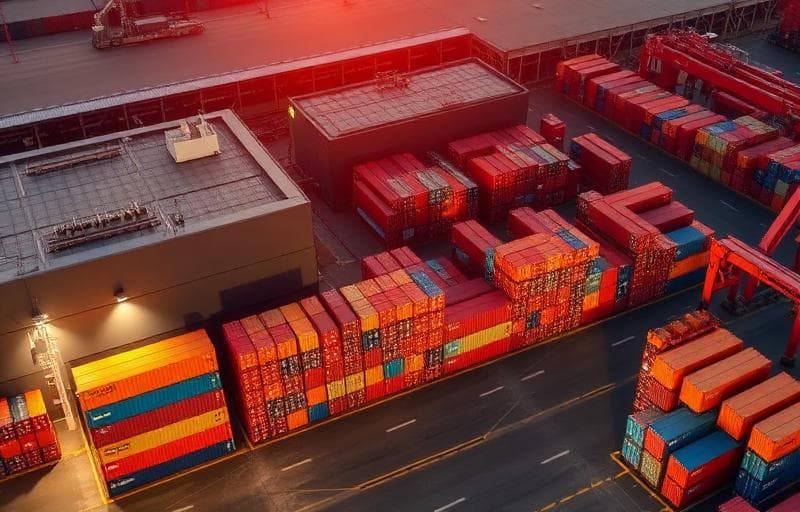
Moving a normal container from an overseas supplier to an Indian customer is usually a fairly structured process — the container arrives at the port, customs clearance is completed, and a truck takes it to the final destination. Large infrastructure equipment doesn't always work that way.
A port crane, dredging machine, heavy generator, transformer, conveyor system or large fabricated structure can turn a straightforward import into a much more complicated logistics exercise. There's another issue project teams sometimes discover only after the shipment is already on its way: the equipment can arrive before the project is ready for it.
At that point, the question changes from "how do we import this equipment?" to "where do we keep it, and how do we get it to the project site at the right time?" That's where project logistics becomes more than transportation — a combination of port handling, customs clearance, warehousing, heavy-haul transportation, route planning and project scheduling.
Why Project Cargo Needs a Different Logistics Plan
A container filled with packaged consumer products can usually be handled using standard equipment and established transportation routes. A 60-tonne industrial machine is a different story — so is a structure that's 15 metres long, or equipment that's both heavy and unusually wide.
Project cargo can include port cranes, dredging machinery, heavy construction equipment, transformers and generators, industrial pumps, conveyor systems and fabricated steel structures. The exact handling requirements depend on the cargo — what matters is that the logistics plan needs to be built around the equipment rather than trying to fit the equipment into a standard logistics process.
The Logistics Planning Often Starts Months Before Arrival
One of the biggest misconceptions about project cargo is that logistics planning begins when the vessel reaches the port. In reality, it should usually start much earlier. Before the equipment is shipped, the logistics team needs to understand exact dimensions, gross weight, centre of gravity, lifting points, port of arrival, available lifting equipment, storage requirements, final destination and expected installation date.
For example, a difference in width of even a few centimetres can change the type of trailer required or the route that can be used. That's why getting accurate technical information from the manufacturer is one of the first steps in a project-cargo plan.
What Happens When the Project Site Isn't Ready?
Imagine a company constructing a new port facility. A major piece of equipment has been manufactured overseas, the supplier is ready to ship it, and the vessel schedule is confirmed — but construction at the site is running behind schedule. The equipment arrives in India in June; the project won't need it until September.
Sending it directly to the site may not be practical. The foundation might not be ready, there may not be enough space for unloading, or the access road may not be capable of handling the equipment. In this situation, planned temporary storage can provide a useful buffer — instead of forcing the project to accept the equipment immediately, the cargo can be held safely until the site is ready, provided the chosen facility is suitable.
Temporary Storage Can Give Projects More Flexibility
Large infrastructure projects rarely run exactly according to their original schedule — construction delays happen, installation dates move, equipment arrives earlier than expected. A suitable storage arrangement can help absorb some of these changes.
Depending on the equipment, storage could involve covered warehousing, open storage, specialised project-cargo yards or secured heavy-load areas. The right solution depends on the dimensions, weight and physical characteristics of the equipment — a conventional warehouse isn't automatically suitable for a 40-tonne machine, which is why storage planning needs to happen alongside transportation planning.
Where Does an FTWZ Fit Into the Picture?
An FTWZ can be considered as part of the logistics strategy for eligible imported goods and transactions, particularly relevant when there's a gap between the arrival of imported equipment and the point at which the customer actually needs it.
Rather than treating arrival at the Indian port and delivery to the project site as one continuous event, the company can evaluate whether an appropriate project cargo warehousing arrangement can provide an intermediate stage for the cargo. The customs treatment, permitted activities and suitability of the facility depend on the applicable regulations and the nature of the transaction — an FTWZ isn't a universal solution for oversized cargo, but it's one option that may make sense in the right project structure. See how Astromar handles project cargo →Customs Planning Shouldn't Be Left Until the Vessel Arrives
Project equipment often comes with detailed technical documentation important during customs clearance — commercial invoice, packing list, Bill of Lading, technical specifications, HS classification information, equipment drawings and other product-specific documents depending on the shipment.
The important point is that customs planning should happen before the cargo arrives. If a technical description is unclear or the documentation doesn't match the physical equipment, resolving the issue after arrival can create unnecessary delays — for a project where equipment is tied to a construction schedule, even a small delay can have a wider impact. Why HS Classification Can Become Complicated
Project equipment can be highly specialised — the manufacturer may describe a machine using an engineering term, while customs documentation requires classification based on the nature and function of the goods. A large shipment may also contain several related components: main machinery, electrical systems, control equipment, hydraulic components, spare parts and structural components, each potentially needing individual consideration depending on their nature and applicable tariff rules.
This is one reason technical teams and customs professionals often need to work together — the engineering team understands what the equipment does, and the customs team understands the documentation and classification requirements.
Choosing the Right Port and Getting the Equipment Out
For project cargo, choosing a port isn't always as simple as selecting the closest one. The project team may need to look at heavy-lift capability, available cranes, berth infrastructure, vessel compatibility, cargo-handling facilities and road or rail connectivity to the project site. A port that handles huge volumes of containers may not necessarily be the most convenient option for a particular oversized shipment — the cargo should drive the port decision.
For oversized equipment, transportation can require much more planning than arranging a standard truck — multi-axle trailers, hydraulic modular trailers, heavy-duty low-bed trailers or other specialised transport solutions, depending on the weight, dimensions and configuration of the load.
Why Route Surveys Matter
A road that looks perfectly suitable on a map may present serious problems for an oversized load. The transport team may need to check bridge load restrictions, road width, height clearances, sharp turns, flyovers, railway crossings and overhead electrical lines, some requiring specific permissions from authorities such as the National Highways Authority of India.
For particularly large or heavy cargo, a physical route survey can help identify obstacles before transportation begins — much easier than discovering a problem after a 50-tonne machine is already on the road. Oversized Cargo Isn't Always Extremely Heavy
People often associate project cargo with weight, but dimensions can be just as challenging. A long fabricated structure may be relatively light compared with a transformer, but its length could make transportation difficult. Similarly, a wide machine can face restrictions that a heavier but compact machine would not.
Project logistics therefore looks at several characteristics together — how heavy, how long, how wide, how high, and where the weight is concentrated. Those answers determine how the cargo can be lifted, secured and transported.
Centre of Gravity and Cargo Securing
Two machines with the same weight can require completely different handling arrangements — if one has a high or uneven centre of gravity, lifting and transportation may require additional planning. Manufacturers can often provide drawings showing weight, dimensions, lifting points and recommended handling arrangements, which should be obtained before transportation is booked rather than determined at the port.
Once the equipment is loaded onto a trailer, the job isn't finished either — the cargo needs to remain stable during transportation, requiring careful consideration of load positioning, weight distribution, restraint points and supports. A machine designed to sit on a foundation at a factory isn't necessarily designed to travel several hundred kilometres on a road.
Project Cargo Often Arrives in Several Shipments
Large projects rarely consist of one piece of equipment — a port or infrastructure development could involve dozens or hundreds of individual shipments across stages: structural components, main machinery, electrical and control equipment, auxiliary systems, spare parts and installation materials.
Some equipment may be needed immediately, some months later. Sending everything to the site at the same time may create congestion; holding everything in storage for too long can increase costs. The logistics plan therefore needs to follow the construction schedule, working backward from the installation date rather than simply shipping equipment as soon as the manufacturer says it's ready.
Coastal Shipping Can Be an Option for Some Project Cargo
For projects involving movement between Indian ports, coastal shipping can sometimes be considered as part of the transport plan. Instead of moving heavy equipment entirely by road, cargo could potentially move between suitable ports by sea before continuing by road to the final destination.
This may be worth evaluating when the cargo is particularly heavy, the origin and destination are connected to suitable ports, and the project schedule allows it. Coastal shipping isn't automatically cheaper or faster — the entire journey needs to be compared, including port handling and final-mile transportation. Explore Astromar's coastal shipping services →What About Duty and Working Capital?
Large infrastructure equipment can represent a significant investment. If equipment arrives months before it's required, capital is already tied up in the imported goods. Where an eligible FTWZ arrangement applies, the timing of customs duty treatment can differ from an immediate domestic import-clearance model — potentially providing working-capital flexibility, depending on the transaction structure and applicable regulations.
But businesses shouldn't look at duty timing in isolation. They should also consider storage costs, insurance, handling, transportation, financing costs and the project schedule. The cheapest customs structure isn't necessarily the cheapest overall logistics solution.
Project Logistics Is a Coordination Exercise
A major infrastructure shipment can involve the overseas manufacturer, freight forwarder, shipping line, port, customs broker, warehouse operator, heavy-haul transporter, project contractor and installation contractor — each controlling a different piece of the journey.
If the warehouse is ready but the heavy-haul transporter isn't available, the equipment can't move. If the transporter is ready but the site isn't prepared, delivery may still have to wait. Project logistics works when these moving parts are coordinated.
A Realistic Example
Consider a company importing a large port-handling machine from Europe. The machine reaches an Indian port in June; the project team originally expected the installation area to be ready by July, but construction is delayed and the new installation date is September.
The logistics team could try to deliver the machine immediately and leave it at the project site, explore suitable temporary storage, or evaluate whether an FTWZ structure is appropriate for the eligible imported cargo. In August, the team can review site readiness, road access, heavy-lift equipment and the installation team's schedule, then move the equipment when the project is genuinely ready. The important lesson is that earliest delivery isn't always best delivery.
Site Readiness Should Be Confirmed Before Final Delivery
Before moving oversized equipment to the project site, several basic questions should be answered: Is the foundation ready? Can the transport vehicle enter the site? Is there enough space to manoeuvre? Is the unloading crane available? Is the installation team present?
If the answer to these questions is no, delivery may simply create another storage problem at the project site. A successful delivery isn't just getting the equipment through the gate — it's getting the equipment into the correct position at the correct time.
Final Thoughts
Large infrastructure projects depend on equipment arriving at the right place and the right time. That sounds simple until the equipment is 15 metres long, weighs several dozen tonnes and is needed at a construction site that's still being built. At that point, every stage of the journey matters — the port, the customs documentation, the storage location, the transport equipment, the road route and the project schedule.
For some shipments, direct delivery from the port may be the most practical approach. For others, temporary storage can provide a useful buffer when equipment arrives before the site is ready. An FTWZ can also be evaluated for eligible imported cargo and transaction structures where the applicable customs framework supports it, and coastal shipping may be worth considering for certain port-to-port movements.
Astromar Logistics Pvt. Ltd. supports businesses managing complex import, warehousing and logistics requirements across India, including project cargo and infrastructure equipment. For infrastructure and oversized cargo, the right combination of warehousing, transportation and customs clearance can help businesses manage the gap between import arrival and project-site requirements.
None of these options should be selected simply because they exist. The better approach is to start with the equipment and work backward from the date it needs to be installed. For project cargo, successful logistics isn't about moving the equipment as quickly as possible — it's about moving it safely, legally and at the right time. Related Topics
oversized cargo logistics Indiaport equipment importinfrastructure project cargoheavy equipment transport IndiaFTWZ project cargo storageroute survey oversized cargo
Need FTWZ Warehousing or Freight Support?
Talk to our logistics experts — free consultation, no commitment.