
Freight
Air Freight vs Sea Freight: Complete Guide to Choosing the Right Shipping Mode
28 Dec 2025 · 18 min read
The decision between air freight and sea freight is one of the most important choices in international logistics. Air freight is fast but expensive. Sea freight is economical but slow. But the real decision is far more nuanced — this guide gives you a complete framework to choose the right mode for your cargo, timeline, and budget.
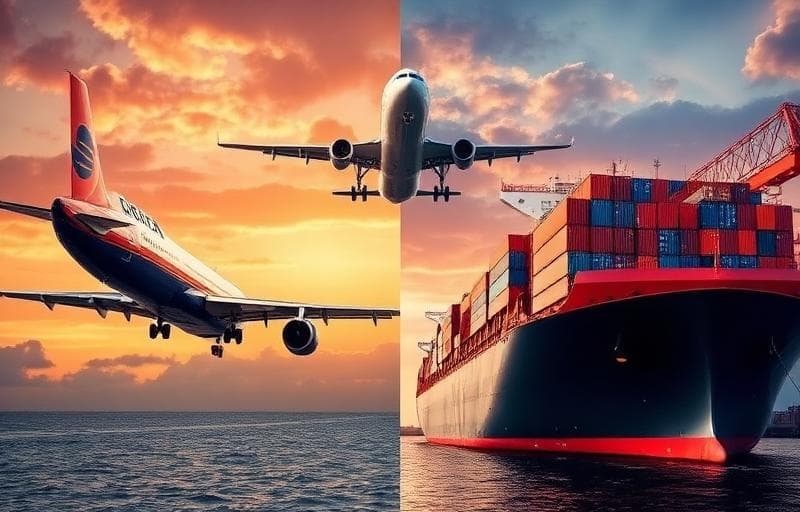
Air vs Sea Freight — Key Differences
Transit Time India–Europe: Air 2–5 days vs Sea 18–25 days
Transit Time India–USA: Air 3–6 days vs Sea 25–35 days
Cost per kg: Air freight commands a significant premium over sea freight — rates vary by lane, season, and carrier, so confirm current pricing with your freight provider
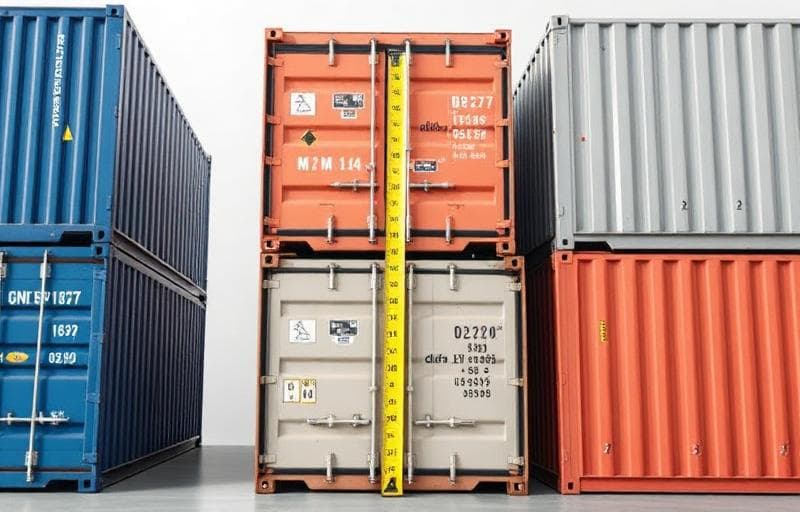
Minimum shipment: Air 1 kg vs Sea 1 CBM (LCL)
Cargo size limit: Air max ~150 cm longest side vs Sea no limit
Reliability: Air high (less weather risk) vs Sea moderate (port delays)
Best for: Air = high value, time-sensitive; Sea = high volume, non-urgent
See CBIC's official customs resources →When to Choose Air Freight
Choose air freight when:
• Time is critical — product launches, retail replenishment, production line stoppages needing urgent parts
• High value, low volume — electronics, semiconductors, pharmaceuticals where inventory carrying cost is high
• Perishables — fresh produce, biologics, cut flowers, fresh seafood with short shelf life
• Compliance deadlines — shipments needed before regulatory deadline or trade show
• Security-sensitive cargo — high-value items where sea transit risk is unacceptable
Break-even rule: air freight economics tend to make sense once cargo value per kg rises high enough that inventory carrying cost outweighs the freight premium — get current rates from your freight provider to calculate your specific break-even point.
See FSSAI's cold storage guidelines →When to Choose Sea Freight
Choose sea freight when:
• High volume — FCL economical above 15–18 CBM regardless of cargo type
• Non-urgent cargo — raw materials, machinery, furniture, textiles, commodities
• Heavy or oversized cargo — equipment, vehicles, project cargo that cannot fly
• Price-sensitive products — where freight cost is a significant % of product value
• FTWZ supply chain — sea freight into FTWZ with duty deferment is a powerful combination
For most manufacturing companies and bulk importers, sea freight is the default mode.
See how to calculate your shipment's CBM →Break-Even Analysis — Air vs Sea
Calculate your break-even point:
Air freight premium over sea = (Air rate - Sea rate) per kg
Inventory carrying cost = (Product value × monthly interest rate) ÷ 30 days in transit
If inventory carrying cost for the extra sea transit days exceeds the air freight premium, air freight is economically justified — even for lower value goods.
Where your product lands on this break-even calculation depends on current freight rates and your cost of capital — confirm both with your freight provider before deciding.
Sea Freight + FTWZ — The Best of Both Worlds
For many Indian importers, the optimal strategy is:
1. Ship by sea (lower freight cost)
2. Store in FTWZ (defer customs duty and IGST)
3. Clear domestically in batches as orders come in
4. Re-export portions without duty
This combines sea freight cost savings with FTWZ working capital benefits — delivering the best overall landed cost for your products.
Astromar Logistics manages end-to-end sea freight + FTWZ supply chains from all major global origins to our pan-India FTWZ network.
Visit DGFT, Ministry of Commerce & Industry →Related Topics
air freight vs sea freight Indiaair freight Indiasea freight IndiaFCL LCL Indiafreight comparison Indiashipping mode selectionair cargo Indiaocean freight India
Related Articles


Need FTWZ Warehousing or Freight Support?
Talk to our logistics experts — free consultation, no commitment.